Kidney stones are a common urinary health problem that can cause significant discomfort and, in some cases, serious complications if left untreated. While some stones remain unnoticed and pass naturally through urine, others may cause severe pain, urinary difficulties, or infections. Understanding kidney stone symptoms can help individuals recognise potential problems and seek medical attention before complications develop.
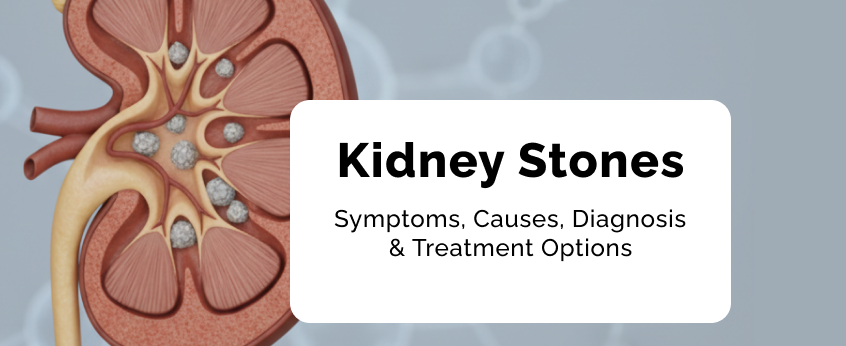
Kidney stones form when certain minerals and salts in the urine become concentrated and crystallise. Over time, these crystals can combine to form stones of different sizes. Some remain inside the kidneys, while others move into the ureters, the tubes connecting the kidneys to the bladder.
Recognising the early signs of kidney stones is important because symptoms may initially be mild or mistaken for other health conditions. Although not every stone requires surgery, timely diagnosis helps determine the most appropriate treatment.
What Are Kidney Stones and Why Do They Develop?
Kidney stones are hard deposits formed from minerals and salts present in urine. They may develop in one or both kidneys and vary considerably in size.
Several factors can contribute to stone formation. Common kidney stone causes include:
- Dehydration: Drinking insufficient fluids can produce concentrated urine, increasing the likelihood of crystal formation.
- Dietary habits: Excessive sodium intake and certain dietary patterns may increase stone risk.
- Family history: Individuals with relatives who have experienced kidney stones may have a higher risk.
- Medical conditions: Obesity, recurrent urinary infections and certain metabolic disorders can contribute to stone formation.
- Certain medications and supplements: Some medicines and excessive use of specific supplements may increase stone risk.
Understanding these factors can help patients make informed decisions about prevention and long-term urinary health.
7 Kidney Stone Warning Signs You Should Never Ignore
The signs of kidney stones can vary depending on the stone’s size, location and whether it obstructs urine flow. Some individuals experience intense discomfort, while others may have relatively mild symptoms.
The following seven warning signs deserve attention.
- Sudden and Severe Pain in the Back or Side
One of the most recognisable kidney stone symptoms is sudden pain in the back or side, usually below the ribs.
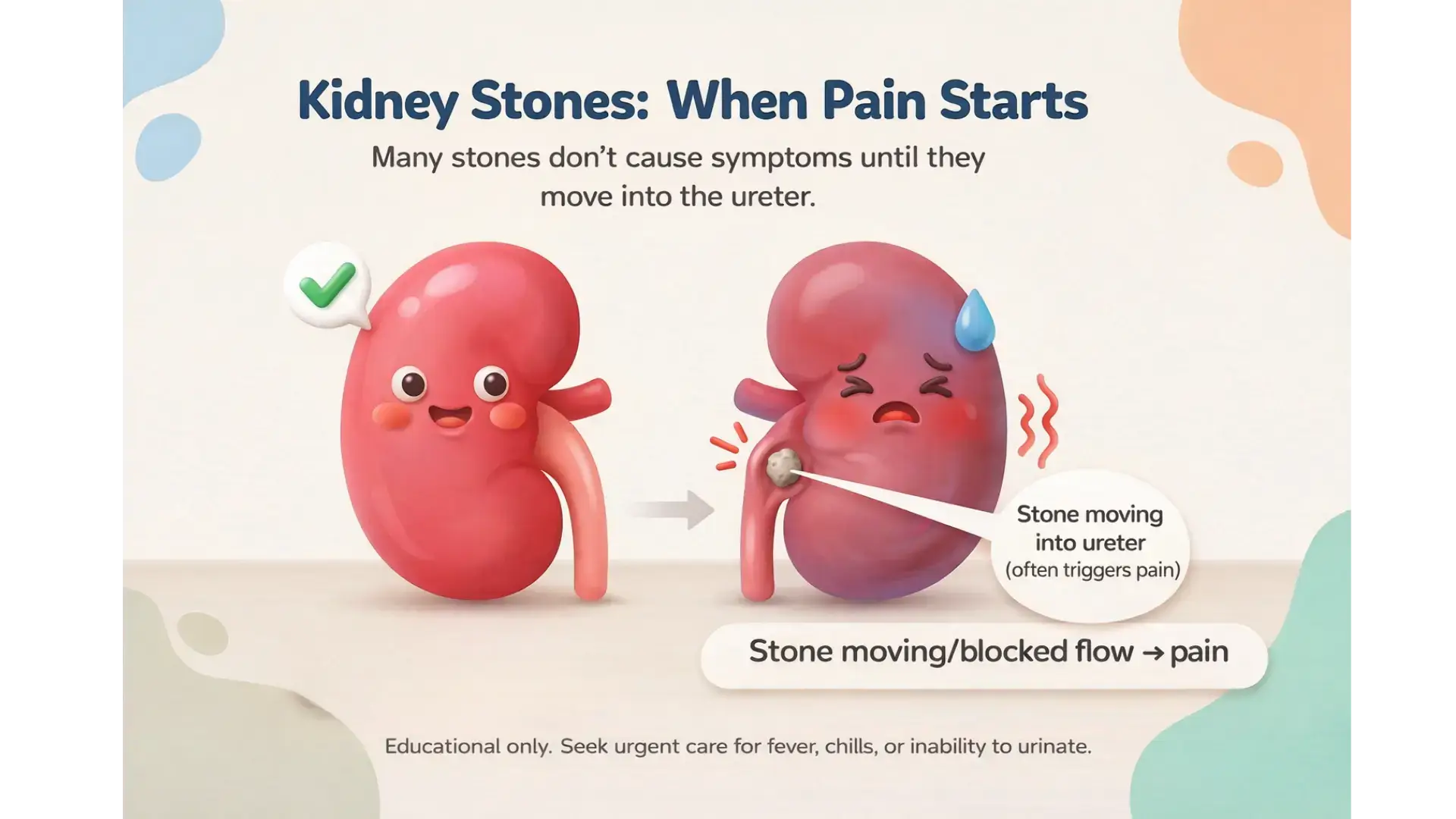
This discomfort often develops when a stone moves into the ureter and interferes with normal urine flow. The pain may begin unexpectedly and fluctuate in intensity.
Typical characteristics of kidney stone pain include:
- Sharp discomfort in the back or side.
- Pain that develops suddenly.
- Episodes of increasing and decreasing intensity.
- Difficulty finding a comfortable sitting or lying position.
- Pain that may spread towards the lower abdomen.
Unlike ordinary muscular back pain, discomfort caused by a moving stone may occur in waves and may not improve with changes in posture.
Persistent or severe pain requires medical evaluation.
- Pain Spreading Towards the Lower Abdomen or Groin
Another important symptom is pain that travels from the side of the body towards the lower abdomen or groin.
As a stone moves through the urinary tract, the location of discomfort may change.
These signs of kidney stones are sometimes confused with abdominal problems, muscular strain or other urinary conditions.
Patients may experience:
- Pain extending towards the groin.
- Discomfort on one side of the lower abdomen.
- Pain that changes location.
- Sudden episodes of intense discomfort.
The severity of kidney stone pain does not always indicate the size of the stone. Even relatively small stones can cause considerable discomfort if they obstruct urine flow.
- Burning Sensation or Pain During Urination
A burning sensation while passing urine can be among the early signs of kidney stones, particularly when a stone reaches the lower urinary tract.
However, burning urination is also commonly associated with urinary tract infections and other conditions.
Patients may notice:
- Burning or stinging while urinating.
- Discomfort near the bladder.
- Pain during urination.
- An increased urge to pass urine.
These symptoms should not automatically be attributed to stones.
A urine examination and appropriate imaging may be necessary to identify the underlying problem.
- Blood in the Urine
Blood in the urine, medically known as haematuria, is another important warning sign.
As a stone moves through the urinary tract, it may irritate the lining and cause bleeding.
Among the kidney stone warning signs, visible blood in urine deserves particular attention because it can also indicate infections, kidney disorders or other urinary tract conditions.
Urine may appear:
- Pink.
- Red.
- Brownish.
Sometimes, blood is present only in microscopic amounts and is detected during laboratory testing.
Even when there is no associated discomfort, visible blood in urine should be evaluated by a healthcare professional.
- Frequent Urination or Difficulty Passing Urine
Changes in urinary habits can also indicate a stone moving through the urinary system.
Some patients experience a frequent urge to urinate, even when the bladder contains relatively little urine.
Common kidney stone symptoms associated with urinary changes include:
- Frequent urination.
- Sudden urgency to pass urine.
- Passing small amounts of urine repeatedly.
- Discomfort while emptying the bladder.
These symptoms may occur when a stone approaches the bladder or irritates the lower urinary tract.
However, difficulty passing urine may have several causes, including urinary obstruction.
An inability to pass urine requires urgent medical assessment.
- Nausea and Vomiting Along With Pain
Kidney stones can sometimes cause nausea and vomiting, particularly during episodes of severe discomfort.
The kidneys and digestive system share certain nerve pathways, which may contribute to these symptoms.
Patients experiencing kidney stone pain may also report:
- Nausea during painful episodes.
- Vomiting.
- Reduced appetite.
- General discomfort or restlessness.
Repeated vomiting can increase the risk of dehydration, potentially worsening the patient’s condition.
Medical attention is important when vomiting prevents adequate fluid intake or occurs alongside persistent abdominal or back pain.
- Fever, Chills and Signs of Infection
Fever and chills accompanying suspected urinary stones should never be ignored.
These symptoms may indicate an infection in the urinary system. When infection occurs alongside an obstructing stone, the condition can become a medical emergency.
Important kidney stone warning signs requiring urgent evaluation include:
- Fever and chills.
- Severe back or side pain accompanied by fever.
- Persistent vomiting.
- Feeling unusually weak or unwell.
- Reduced urine output.
An infected, obstructed urinary system may require immediate antibiotics and urgent drainage.
Patients should not attempt to manage these symptoms through home remedies alone.
Early Signs of Kidney Stones: Why Timely Diagnosis Matters
Not all kidney stones produce noticeable symptoms immediately. Some remain inside the kidney without causing pain and are discovered incidentally during imaging for another medical concern.
However, when symptoms develop, recognising them early can help prevent complications.
The signs of kidney stones may resemble urinary infections, gastrointestinal disorders or other abdominal conditions.
Therefore, diagnosis should not rely on symptoms alone.
Timely evaluation can help identify:
- The location of the stone.
- Its approximate size.
- Whether urine flow is obstructed.
- Signs of infection.
- Whether kidney function is affected.
The appropriate approach depends on the clinical findings rather than discomfort alone.
Kidney Stone Symptoms in Women
Kidney stone symptoms in women may sometimes be confused with gynaecological or urinary conditions.
Lower abdominal discomfort, urinary urgency and pain around the pelvic region can overlap with symptoms of urinary tract infections, ovarian conditions or menstrual-related discomfort.
Women may experience:
- Pain in the back or side.
- Lower abdominal discomfort.
- Burning urination.
- Blood in urine.
- Nausea or vomiting.
Because several conditions can produce similar symptoms, medical assessment is important.
The severity and pattern of kidney stone symptoms in women depend primarily on the stone’s location, obstruction and associated complications rather than gender alone.
Kidney Stone Symptoms in Men
Kidney stone symptoms in men may include severe discomfort extending from the back towards the lower abdomen, groin or testicular region.
When a stone moves through the ureter, pain may radiate towards the groin because of shared nerve pathways.
Men may experience:
- Sudden pain in the side or back.
- Pain extending towards the groin or testicle.
- Urinary urgency.
- Burning urination.
- Blood in urine.
These symptoms may also resemble other urological conditions.
Therefore, kidney stone symptoms in men should be assessed carefully, particularly when pain is severe or associated with fever, vomiting or difficulty urinating.
Sudden severe testicular pain also requires immediate evaluation to exclude other emergencies.
How Are Kidney Stones Diagnosed?
When patients report suspected kidney stone symptoms, doctors may recommend investigations to confirm the diagnosis and assess possible complications.
Medical History and Physical Examination
The doctor may ask about the location and duration of pain, urinary changes, previous stone episodes, dietary habits and family history.
Urine Examination
Urine tests can help identify blood, signs of infection and certain substances associated with stone formation.
Blood Tests
Blood investigations may assess kidney function, calcium levels and other relevant parameters.
Ultrasound Examination
Ultrasound can help identify certain kidney stones and detect swelling caused by urinary obstruction.
CT Scan
A non-contrast CT scan may be recommended when detailed imaging is required. It can help determine the stone’s size, location and associated obstruction.
The choice of investigation depends on the patient’s symptoms, medical history and clinical condition.
Understanding Kidney Stone Treatment Options
The appropriate kidney stone treatment depends on several factors, including stone size, location, symptoms, kidney function and whether infection or obstruction is present.
Not every patient requires surgery.
- Observation and Conservative Management
Small stones may pass naturally through urine.
Depending on the clinical situation, doctors may recommend:
- Appropriate fluid intake.
- Pain-relieving medication.
- Monitoring symptoms.
- Follow-up imaging.
- Selected medications to assist stone passage.
Patients should follow medical advice rather than attempting to force stone passage through excessive water consumption.
- Medications
Certain medications may help manage pain, nausea or facilitate the passage of selected ureteric stones.
The choice depends on stone location, size and individual medical factors.
- Shock Wave Lithotripsy
Extracorporeal Shock Wave Lithotripsy (ESWL) uses focused shock waves to break suitable stones into smaller fragments that may subsequently pass through urine.
It is not appropriate for every stone.
- Ureteroscopy and Laser Lithotripsy
Ureteroscopy involves passing a thin instrument through the urinary tract to locate and treat stones.
Laser technology may be used to fragment the stone, allowing removal or passage of smaller pieces.
- Percutaneous Nephrolithotomy
Percutaneous Nephrolithotomy (PCNL) may be recommended for selected large or complex kidney stones.
This procedure involves accessing the kidney through a small incision in the back.
A urologist determines the most appropriate approach after evaluating the patient’s condition.
When Should You Seek Kidney Stone Treatment in Lucknow?
Patients experiencing persistent urinary discomfort, blood in urine or recurring back and side pain should seek medical evaluation.
Those looking for kidney stone treatment in Lucknow should prioritise an accurate diagnosis and an individualised treatment plan.
Immediate medical attention is especially important when symptoms include:
- Severe or uncontrolled pain.
- Fever or chills.
- Persistent vomiting.
- Inability to pass urine.
- Reduced urine output.
- Pain accompanied by significant weakness.
These kidney stone warning signs may indicate complications requiring urgent intervention.
Delaying assessment can increase the risk of urinary obstruction, infection and kidney damage.
Can Kidney Stones Be Prevented?
Although not every kidney stone can be prevented, certain lifestyle changes may help reduce recurrence.
Understanding common kidney stone causes is an important part of prevention.
Helpful measures may include:
Drink adequate fluids: Maintaining sufficient hydration helps dilute urine and reduce crystal formation.
Reduce excessive salt intake: High sodium consumption can increase urinary calcium excretion.
Maintain normal dietary calcium: Avoid unnecessarily restricting calcium unless advised by a healthcare professional.
Follow a balanced diet: Moderate excessive animal protein intake and adjust dietary oxalate when medically indicated.
Manage underlying conditions: Appropriate management of metabolic disorders and recurrent urinary infections may reduce certain risks.
Attend follow-up appointments: Patients with recurring stones may benefit from stone analysis and metabolic evaluation.
Prevention strategies should be tailored to the type of stone and individual risk factors.
Frequently Asked Questions
Can kidney stones develop without pain?
Yes. Some kidney stones remain inside the kidneys without causing noticeable discomfort. They may be discovered during ultrasound or other imaging examinations.
Can small kidney stones pass naturally?
Some small stones pass naturally through urine, particularly when they are located in the ureter. However, passage depends on stone size, location and other clinical factors.
Are kidney stones dangerous?
Many kidney stones can be managed successfully. However, stones causing urinary obstruction, infection or impaired kidney function may lead to serious complications if treatment is delayed.
How long does it take for a kidney stone to pass?
The time varies depending on the stone’s size and location. Some stones pass within days, while others may take several weeks or require medical intervention.
Does every kidney stone require surgery?
No. Many stones can be managed conservatively. Surgical or procedural intervention may be necessary when stones are unlikely to pass, cause persistent symptoms or lead to complications.
The Right Diagnosis at the Right Time
Kidney stones can affect daily activities, sleep and overall well-being. While some stones pass naturally, others require medical intervention to prevent urinary obstruction, infection or kidney damage.
Understanding the signs of kidney stones and seeking timely medical advice can help patients avoid unnecessary delays in diagnosis.
The most appropriate kidney stone treatment is not necessarily the most advanced procedure, but the one suited to the patient’s stone size, location, symptoms and overall health.
At Aprajita Hospital, Lucknow, patients seeking evaluation for suspected kidney stones can consult the medical team for an assessment of their symptoms and appropriate investigations.
For individuals exploring kidney stone treatment in Lucknow, understanding the diagnosis, available treatment options and preventive measures is an important step towards informed healthcare decisions.
The focus should remain on timely medical evaluation, personalised treatment planning and long-term urinary health.